




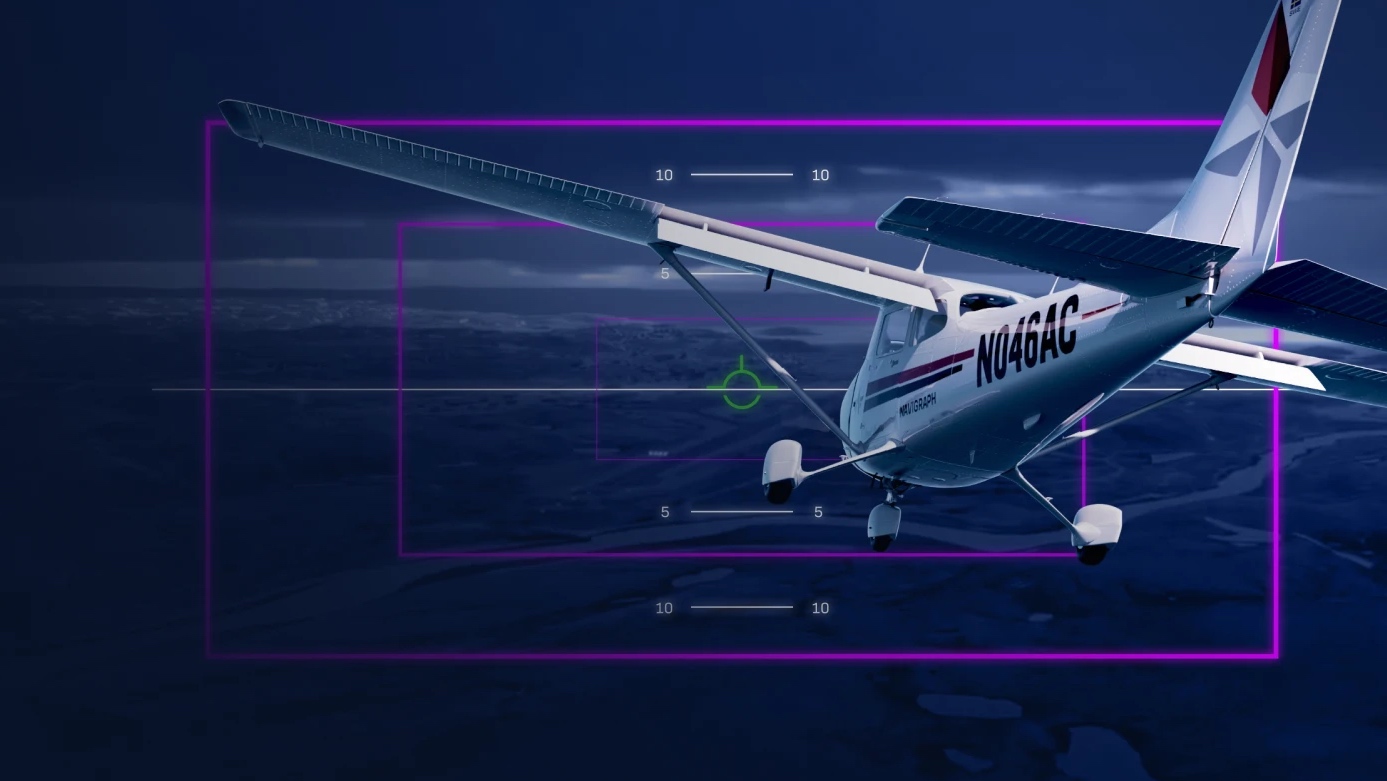
There’s a moment many simmers know well. You’ve planned a nice IFR flight, the weather at your destination is low and gray, and then you open the approach chart and realize there’s no ILS. Just a VOR approach, or an RNAV procedure with a list of minimums you’re not entirely sure how to read. You’ve gotten so used to tuning an ILS that you’d rather not mess around with anything else.
Now Navigraph wants to help with that. The company has launched IFR Approaches, the third course in Navigraph Academy, and it focuses entirely on the procedures that come into play when there’s no ILS to lean on. Like everything else in the Academy so far, it’s free.
A steady build-out since launch
It’s been quite a journey for Navigraph Academy. We first reported on the project back in October 2024, when Navigraph announced a virtual pilot academy aimed at granting simmers a digital PPL. When the platform finally launched in November 2025 with its virtual PPL program, the big surprise was that it came at no cost, and with no Navigraph subscription required.
Then in May this year, Navigraph took the next step with the Instrument Flying course, which introduced instrument fundamentals and an Instrument Qualification for those who pass the exam. IFR Approaches is the natural follow-up, picking up where that course left off and narrowing the focus to the final, most demanding part of an IFR flight.
From radio beams to satellites
The new course is split into three video lessons, and each one uses 3D graphics and visualizations to explain what’s going on. The order is logical, moving from older technology to newer:
- Full procedure VOR approach: flying a published VOR approach with traditional radio navigation and managing the descent without vertical guidance.
- RNAV (GPS) LNAV approach: loading and flying a GPS approach in the G1000 with lateral guidance, using Navigraph Charts, and descending accurately to the MDA.
- RNAV LPV approach: GPS-based guidance both laterally and vertically, which Navigraph compares to the kind of guidance an ILS provides.
It’s a smart way to teach this. Flying a VOR approach the old-fashioned way, with no glidepath to follow, gives you a much better appreciation of what LPV actually does for you. And according to Navigraph, the lessons go beyond the “how” and also explain why different approaches exist, touching on decision-making along the way.
All three lessons are flown in the Cessna 172 with the Garmin G1000. It’s an aircraft that is readily available to anyone in the sim, and keeping the same cockpit across lessons means you’re learning the procedures instead of fighting a new avionics suite each time.
In-sim missions and a qualification to chase
The videos themselves work on any simulator platform. The hands-on part is a little more specific: Navigraph offers dedicated in-sim missions with post-flight analytics for Microsoft Flight Simulator 2020 and 2024, and completing them counts toward a Navigraph Academy qualification.
Navigraph Charts and navigation data are part of the learning experience, which makes sense coming from Navigraph. The company says they help students prepare approaches, understand the published procedures and work with accurate navigation data both in the cockpit and on the chart. The course itself is free, but it’s worth keeping in mind that Navigraph’s charts and navdata are tied to its regular subscription.
One thing Navigraph highlights is that the Academy doesn’t force a set order. If you completed the Instrument Flying course, IFR Approaches builds directly on it. But if you already know your way around a basic IFR flight and only want to get comfortable with non-precision and GPS approaches, Navigraph says you can jump straight in.
IFR Approaches is available now, free of charge, on the Navigraph Academy website.