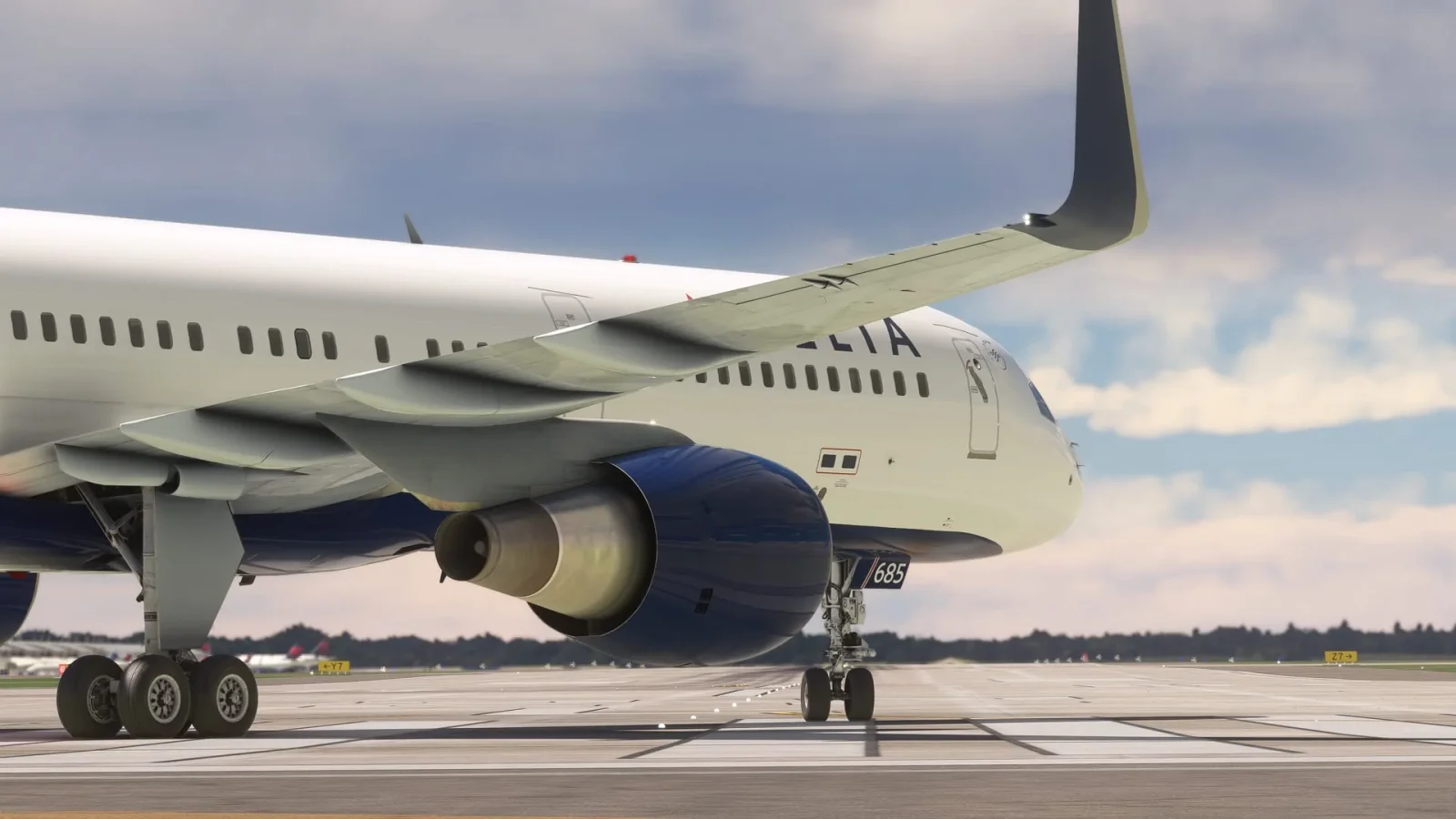







The wait for Bluebird Simulations’ full 757 feature list is over. Back in June, the developer teased that the complete rundown was three to four weeks away, a promise that originally dated back to the stage 2 beta announcement in April. It landed a couple of weeks past that window, which by now feels almost like tradition for this project, but the payoff is substantial: an exhaustive breakdown of the systems powering the long-awaited airliner, published on a brand-new website that gives the 757 (and the upcoming 767) a proper home ahead of launch.
More importantly, Bluebird says the Q3 release window still holds, and the price remains confirmed at $80 USD.
The circuit breaker count keeps climbing
If you’ve followed this project, you may remember the numbers game around circuit breakers. In August 2025, Bluebird mentioned over 150 working breakers. By the time of the FSWeekend trailer in March, that figure had grown to more than 200. The new feature list goes further still: over 500 circuit breakers have been mapped to their correct electrical buses, with more than 200 fully functional at launch and the remaining 300 to be activated in post-release updates.

The electrical system feeds into what Bluebird describes as its core philosophy: systems that interact with one another rather than existing as isolated checkboxes. The cabin is a good example. Passenger counts directly affect cabin temperature logic, and open doors, wind, weather, and pack configuration all influence how hard the air conditioning has to work. Pressurization is fully simulated as well, with two automatic modes and one manual mode running through six distinct flight phases.
The “Pegasus” FMC and a cabin that talks back
On the avionics side, the FMC is modeled after the real-world Pegasus version and supports full LNAV and VNAV with RNAV legs, holds, missed approaches, and go-arounds. The custom autopilot runs across all three Flight Control Computers, and Bluebird says it interacts with the electrohydraulic servos and control laws to reproduce the inertia and response times of the real aircraft, rather than simply following a magenta line. Autoland and auto-trim are included, and hardware users get MobiFlight support for external CDUs, alongside Hoppie ACARS integration with DCL and air-to-air messaging. SimBrief and Navigraph performance uplinks are supported too.
One of the more distinctive features is the communication network. Flight attendants across three cabin zones will call the flight deck with requests, reminders to switch on the seatbelt signs during descent, or complaints about cabin temperature. They will also react to emergencies such as passenger oxygen deployment. The ground crew side is equally connected, with the GND CALL function working from your SimBrief flight plan and EFB boarding states to manage ground power.


The sound package, which we first heard back in 2024 through Bluebird’s collaboration with Boris Audio Works, now counts over 450 cockpit audio samples. Bluebird highlights some unusual touches here, such as electrical generator frequencies subtly altering the pitch of cockpit electronics, and engine acoustics that shift depending on where you’re seated in the cabin. Both the Rolls-Royce RB211-535E and Pratt & Whitney PW2000 are individually tuned, with custom Electronic Engine Control logic and windmilling behavior.
The EFB rounds things out with aircraft state presets (Turnaround, Ready for Taxi, Cruise, and Cold & Dark), live synoptic pages for the electrical, fuel, hydraulic, and pneumatic systems, brake disc temperature monitoring, and full ground services management including progressive pushback.
The home stretch
For a project announced back in 2022 and famously pivoted mid-development from a mid-tier product into a full high-fidelity simulation, this feature list sounds like a closing argument. At $80, the 757 sits firmly in premium territory alongside PMDG and Fenix, and Bluebird clearly knows the scrutiny that comes with that price point. The new website leans into it as well, listing 18+ simulated ATA chapters, five-plus years of development, and a flight model checked by real 757 pilots.
Bluebird says the next update will take a closer look at the FMC and include video previews of the aircraft in action, with exclusive previews already being shared on the team’s Discord server. With Q3 already underway, the runway ahead is getting short. If the release truly is on track, we should be flying this thing within the next two and a half months.
You can read the full feature breakdown on Bluebird’s new website.