





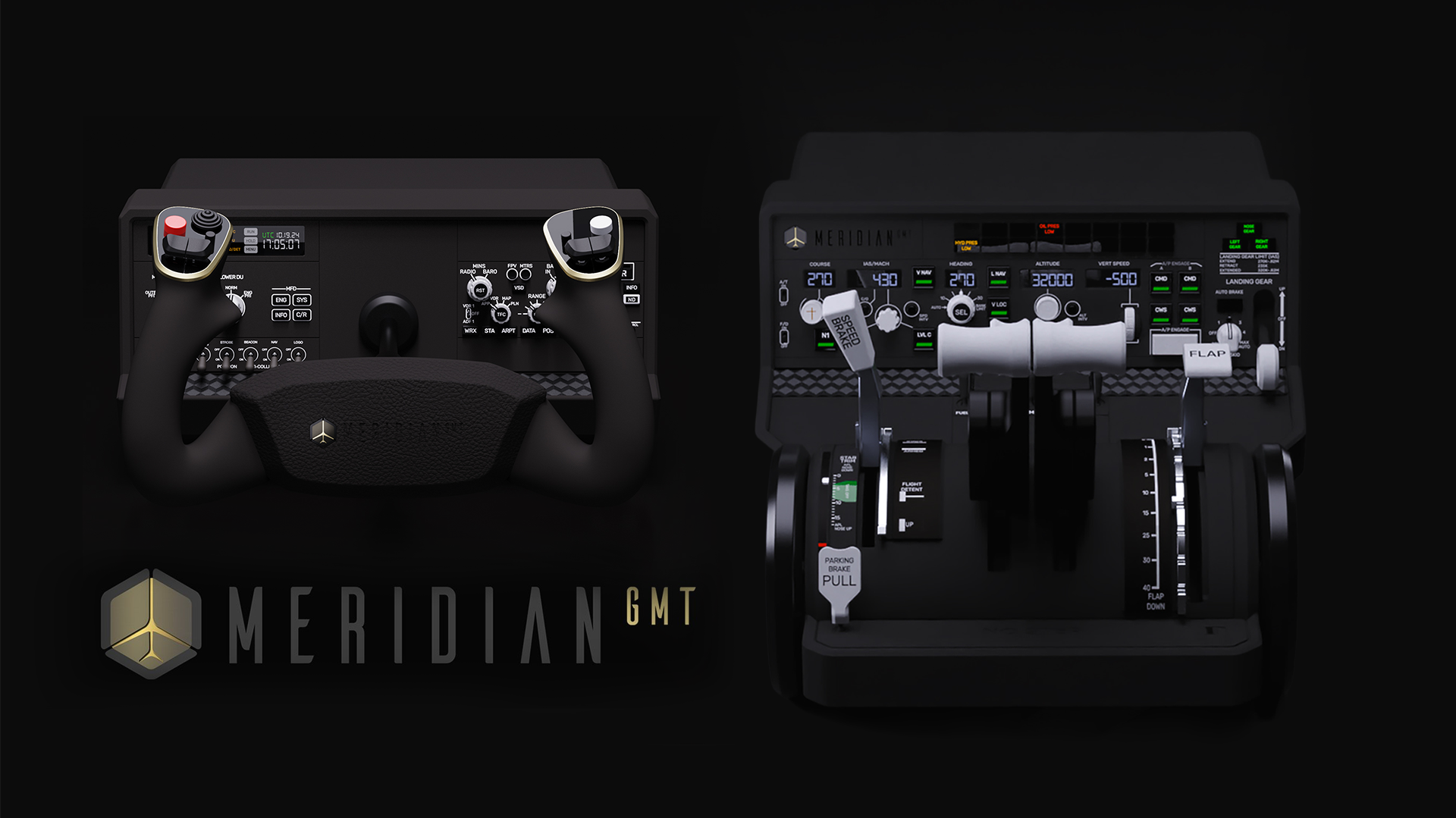
Update (December 31): We have received target pricing information from Meridian GMT. The Horizon Plus and Latitude Plus are expected to cost €369.99 (Incl. VAT) / £319.99 (Incl. VAT) / $349.99 (+ Tax). The developer also clarified that the Latitude Plus throttle will likely be available in separate “Toulouse” and “Everett” editions, so simmers can choose depending on their preference for Airbus or Boeing avionics. In that case, the other configuration can be purchase separately for $/€/£ 99.99.
Regarding US availability, Meridian GMT notes that import tariffs may impact the final listing price, with retailers potentially displaying the tariff costs separately from the MSRP.
Meridian GMT has flipped the switch. After months of teasing, the company’s revamped website is now live. This update moves us past the concept phase and directly into the specifics. We now have concrete details on the new product names, the new technologies being used, and a look at the philosophy driving the team.
Nicki Repenning, the founder of Meridian GMT, shared a message alongside the launch that highlights just how intense this final push has been. He described a “complex and time-consuming process” that the team powered through, often at the expense of sleep and weekends.
“I’ve lost count of the number of times we were told that something wasn’t possible,” Nicki said, “as well as the number of times we found a way to prove them wrong.”
The lineup: Horizon and Latitude
The most immediate change is the nomenclature. The phonetic “Sierra” and “Tango” names are gone. The ecosystem is now anchored by the Horizon Plus™ Flight Controls and the Latitude Plus™ Throttle Quadrant.
Horizon Plus Flight Controls
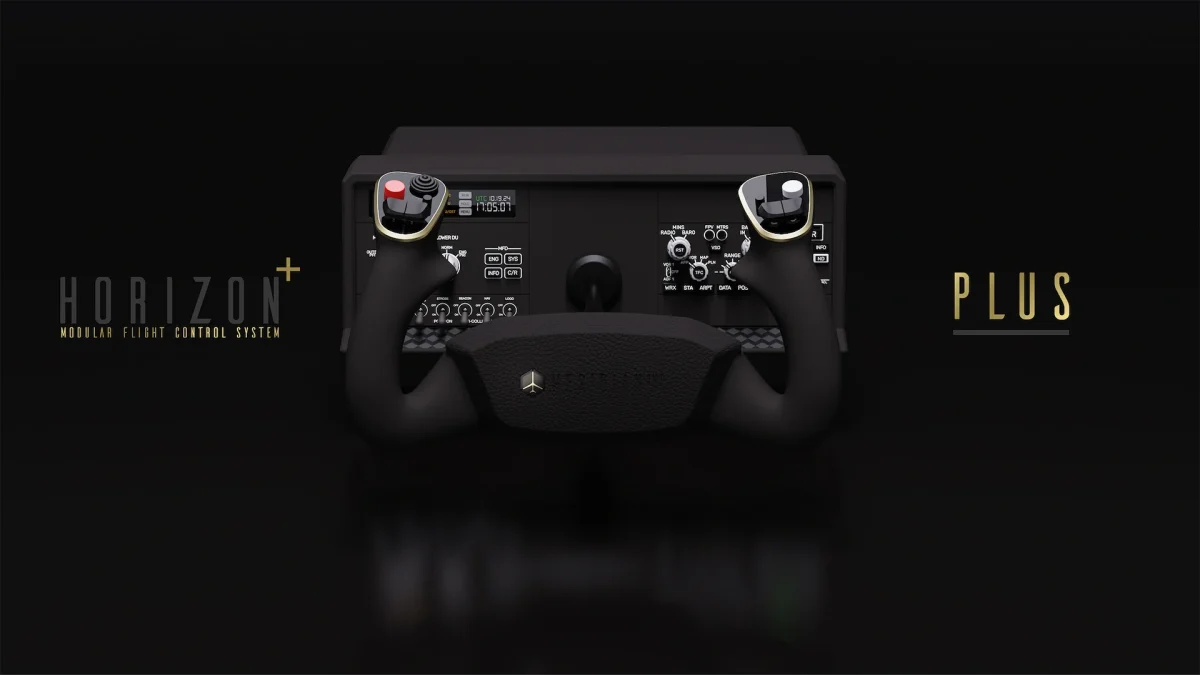
The “Sierra” is officially gone; meet the Horizon Plus Flight Controls. The product page reveals a device that is trying to solve some of the oldest complaints in flight simulation hardware.
The headline feature is the Quantum Leap™ technology. Meridian has moved away from using Hall-effect sensors for everything. Instead, they are using 16-bit TMR (Tunnel Magneto-Resistance) sensors for the roll axis. The developer claims these offer higher stability and are virtually immune to the interference or “drift” that can sometimes plague Hall sensors over time.
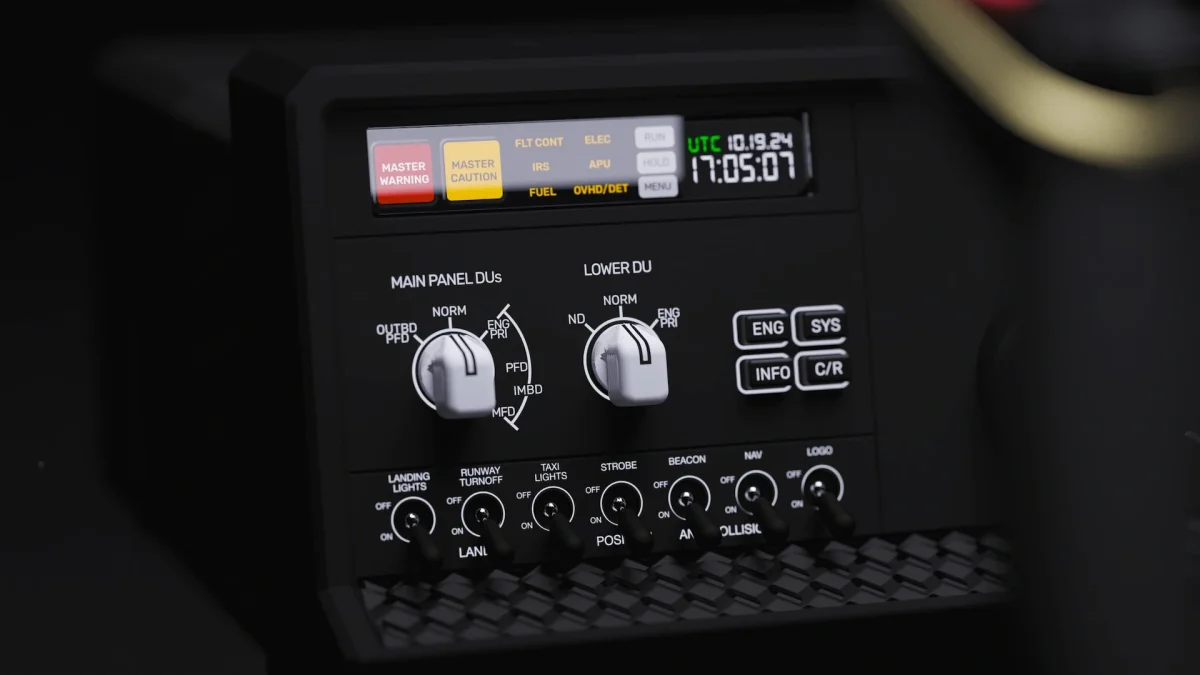
However, they haven’t ditched Hall-effect entirely. The pitch axis still uses a Hall sensor. Meridian explains that Hall sensors are actually superior for the long mechanical travel required for pitch inputs. Furthermore, the pitch axis features asymmetrical travel, offering higher resolution in the aft range (pulling back) to give you more precise control during the flare and landing, while keeping the neutral range linear.
The “Plus” in the name seems to refer to its ModulAIR™ architecture. The yoke base features two physical bays that accept interchangeable avionics modules.
- Boeing Setup: You can slot in a left-side module for avionics pages and a right-side module for EFIS-style controls.
- General Aviation: These can be swapped for a setup that includes a chronometer or engine monitoring display.
- Touchscreen Center: Both setups pair with a central touchscreen that handles master warnings, cautions, and annunciations.
The Horizon Plus also integrates a dual-phase haptic system. It distinguishes between low-frequency vibrations (like engine rumble or airframe buffet) and high-frequency impacts (like touchdown or extending flaps), so the yoke doesn’t just “buzz”: it communicates the aircraft’s state.
Latitude Plus Throttle Quadrant
While the yoke is the center of control, the Latitude Plus Throttle Quadrant appears to be the center of the ecosystem.
Adaptability is the main selling point here. The Latitude Plus is designed to support General Aviation, Airbus, and Boeing configurations. It does this through magnetically attached axis covers and swappable levers. You can reconfigure the physical layout to match what you are flying without needing a screwdriver.
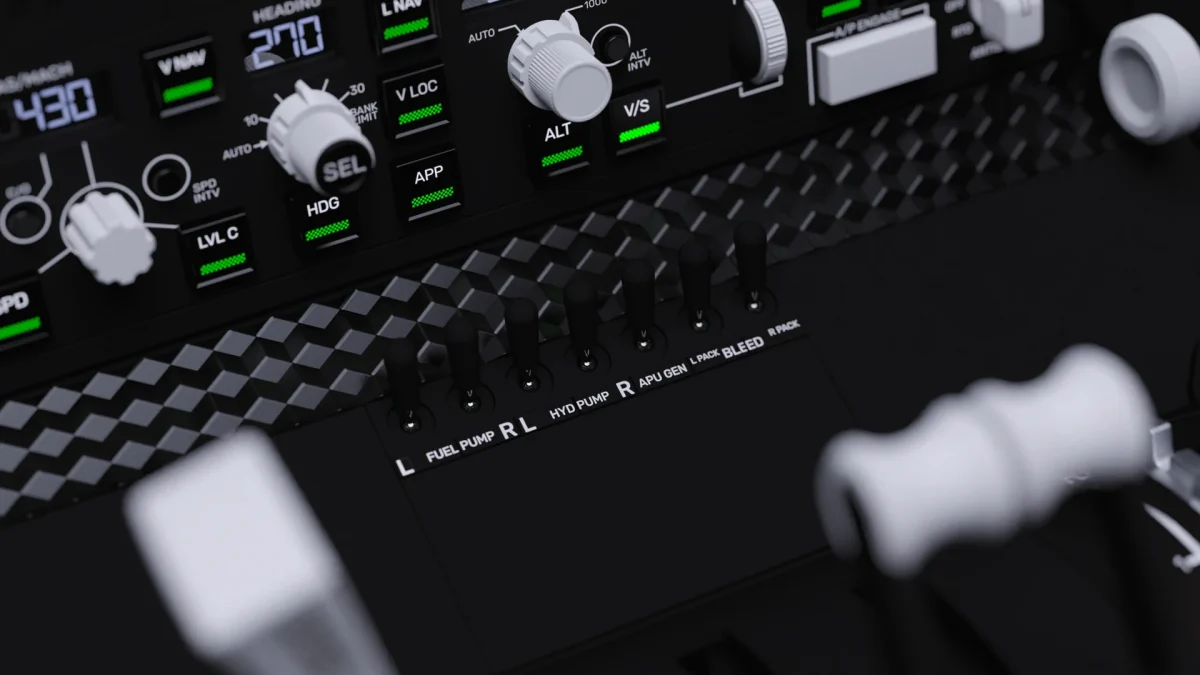
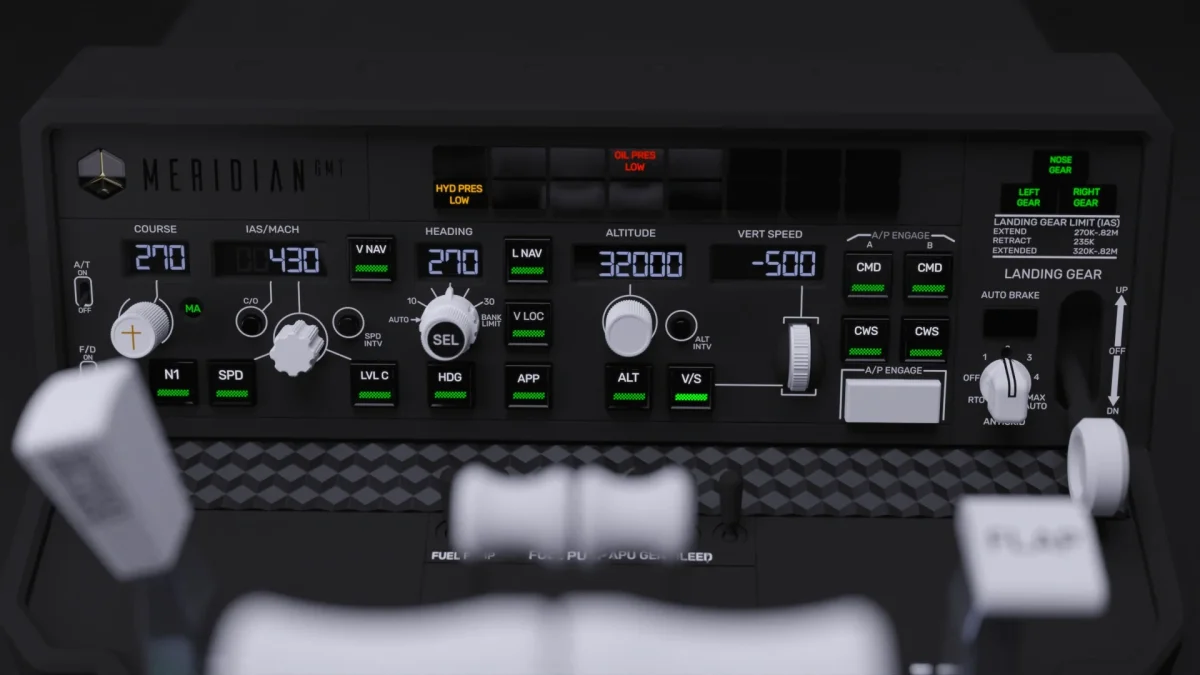
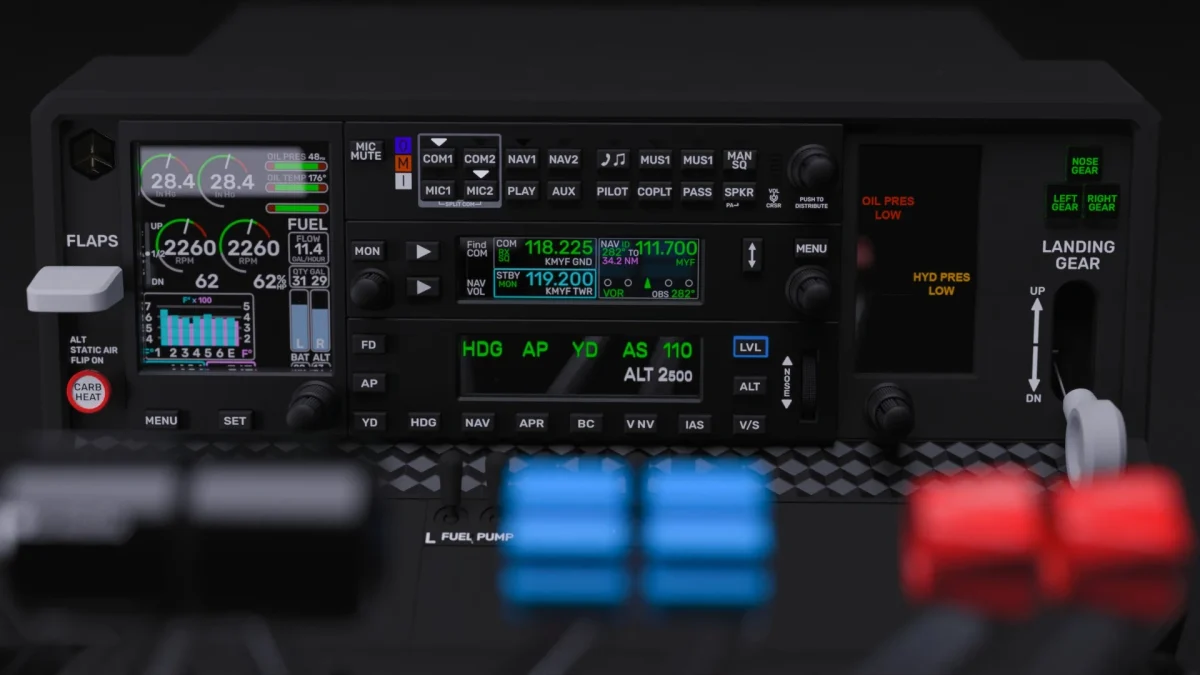
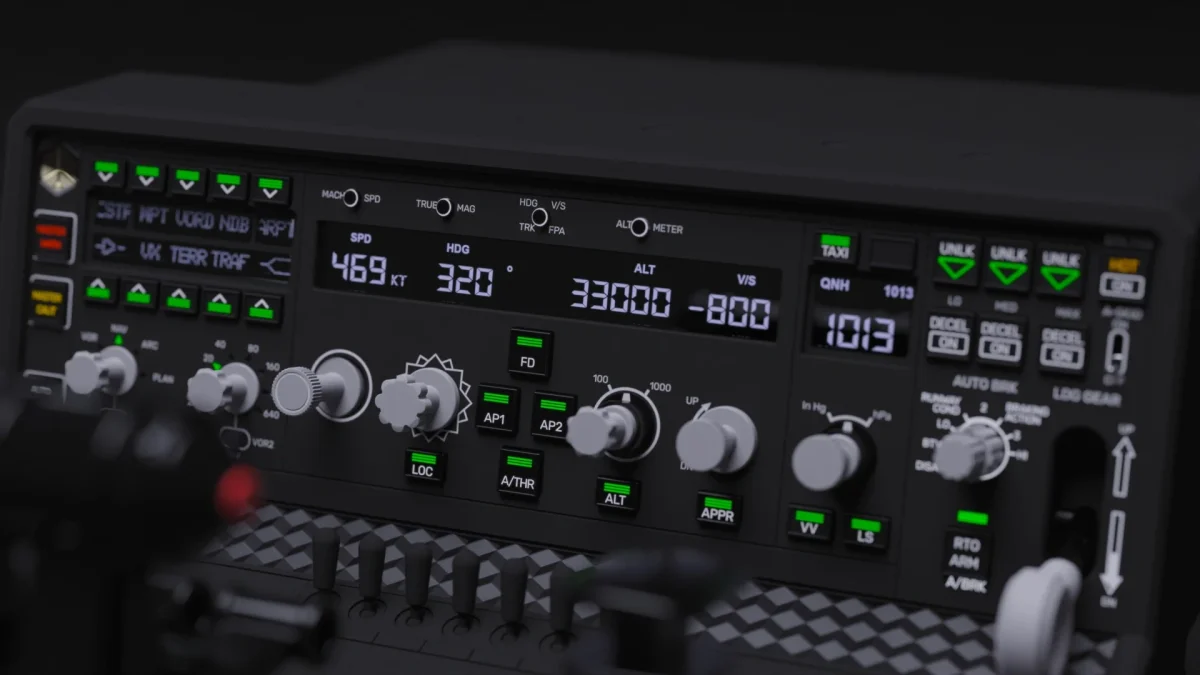
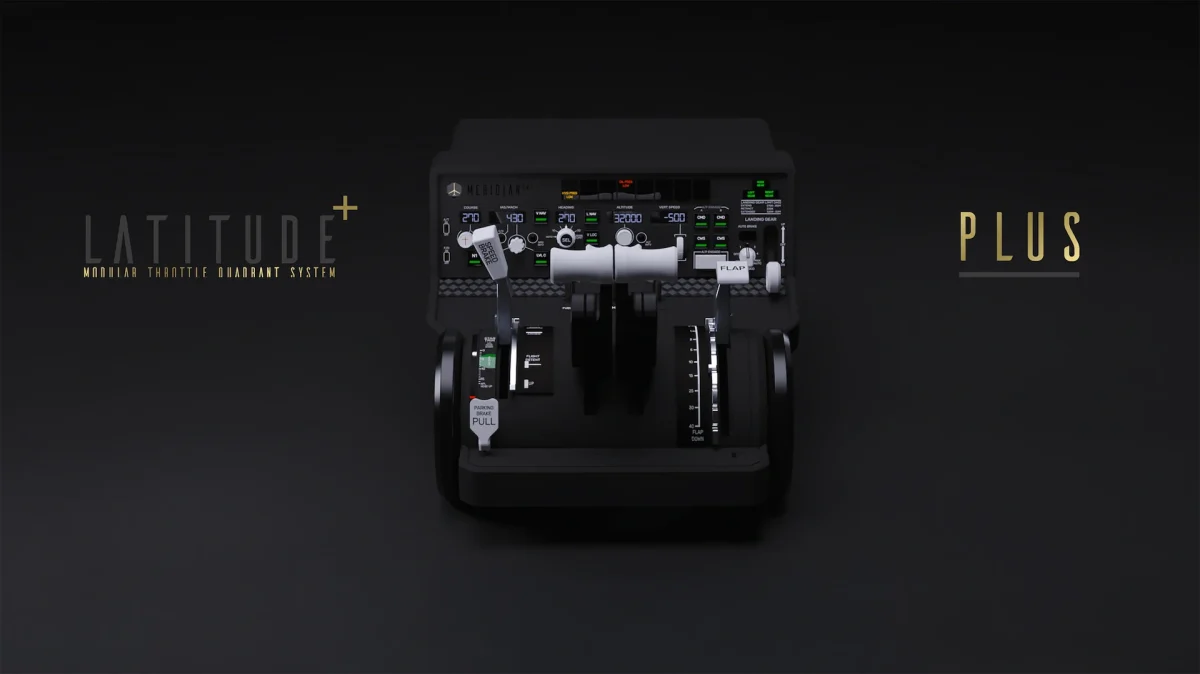
The Latitude Plus also supports optional servo motor upgrades. You do not have to buy a fully motorized throttle upfront. You can purchase the standard unit and add the servo modules later to specific axes. These upgrades enable:
- Motorized trim wheel movement.
- Auto-throttle lever movement.
- Speed brake deployment.
Meridian describes the Latitude Plus as a “hub” for your setup. It includes an integrated USB-C hub, allowing you to daisy-chain other peripherals directly into the throttle, reducing the cable clutter running to your PC. It also features a three-position landing gear lever with a mechanical lock and a customizable annunciator panel.
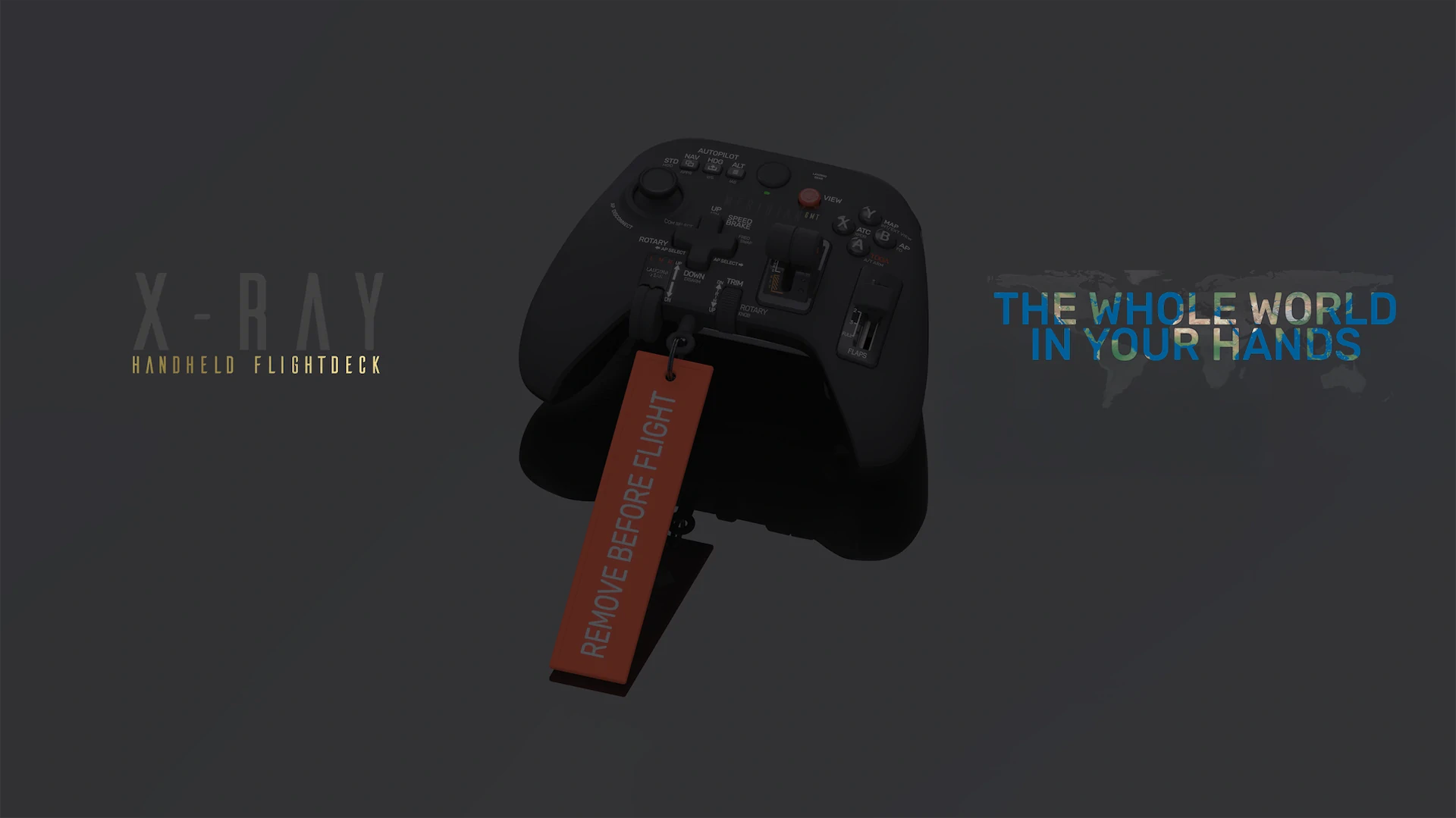
X-Ray Handheld FlightDeck
Rounding out the lineup is the X-Ray Handheld FlightDeck. This device targets console users or simmers with limited desk space. It applies the same modular philosophy to a gamepad form factor, offering swappable faceplates and control layouts. It is a bridge device, designed to offer more “sim-authentic” input than a standard Xbox controller for those who can’t fit a full rig in their living room.
The Roadmap
With the website live, Meridian has laid out a specific timeline for the first half of 2026. They are opting for a “Beta” program first, looking to iron out quirks before mass retail.
- Jan 20, 2026: Beta Pre-order Sign-up for the Yoke (Non-binding).
- Feb 1, 2026: Beta Pre-orders for the Yoke officially open.
- Feb 20, 2026: Beta Pre-order Sign-up for the Throttle.
- Mar 22, 2026: Regular Pre-orders begin for both units.
- Q2 2026: Shipping is expected to commence.
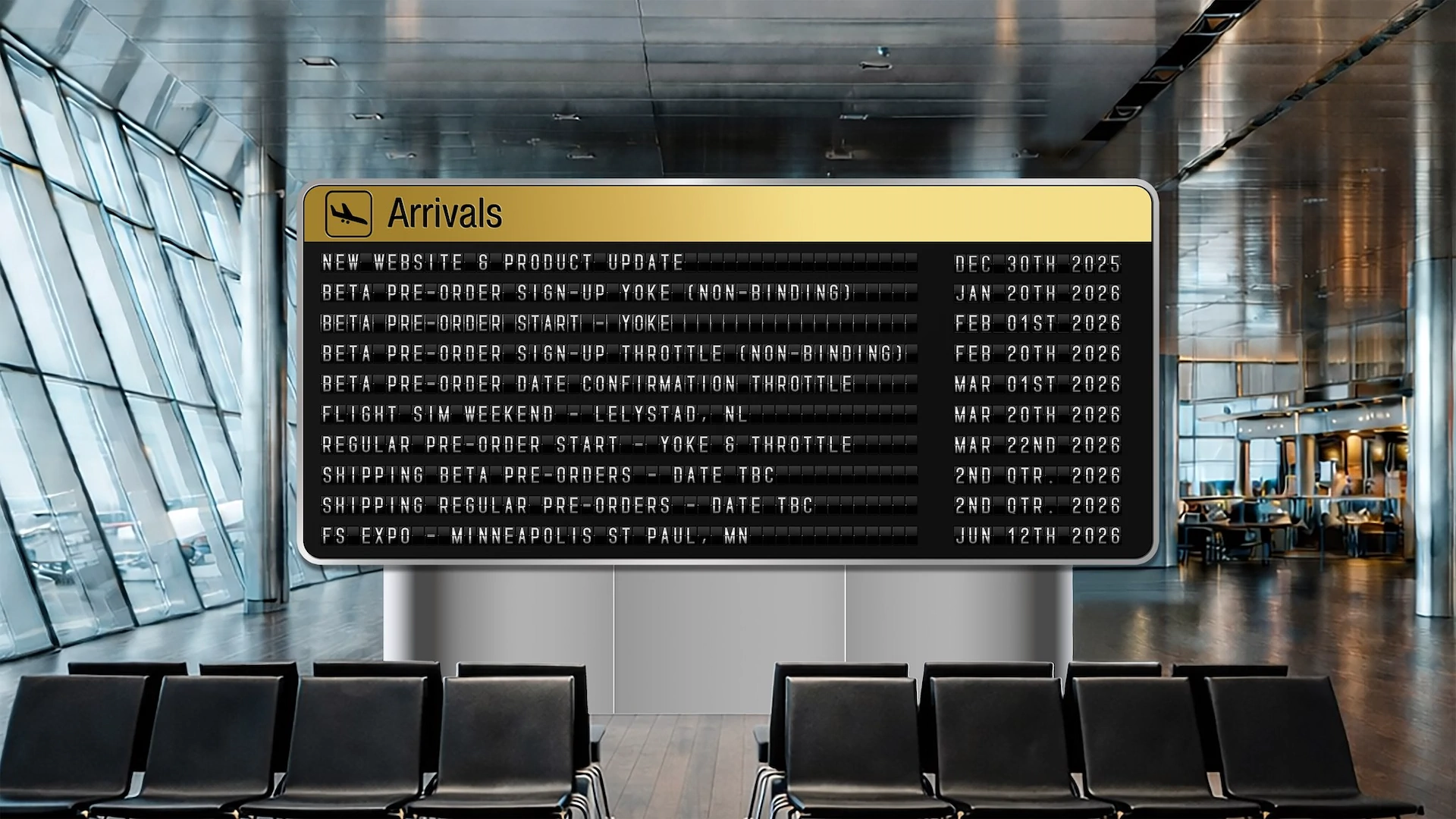
This is a rough estimate, as Meridian pledges to “only start pre-orders if the production date has been scheduled and confirmed by our factory partner.” More accurate launch information should be available soon.
This is a massive pivot for Meridian GMT, and on paper, the technology sounds impressive. But what do you think? Share all your thoughts in the comments below!