








Microsoft Flight Simulator 2024 (MSFS 2024) introduces a wide range of new gameplay mechanics and a stunningly updated recreation of planet Earth, which promises to revolutionize how flight simulation enthusiasts enjoy their hobby. A big part of this whole experience is, of course, the virtual weather depiction in the sim.
MSFS 2024 is set to introduce significant advancements in this area, not only improving the atmospheric simulation from a visual point of view but also how this impacts aviation and the role of the pilot. Here’s everything you need to know about the key changes introduced by the MSFS team in this area!
Enhanced Cloud Graphics
One of the thing pilots will notice when they take to the skies in MSFS 2024 is the visual overhaul of the weather system. The cloud rendering engine, already a standout feature in the 2020 edition, has been significantly enhanced. Clouds now boast more volume and realistic formations, with improved density particularly noticeable in live weather scenarios. From wispy cirrus clouds high above to menacing thunderheads, the sky has never looked more true to life.

The atmospheric lighting engine has undergone a complete rework, employing advanced ray tracing techniques to accurately simulate how light interacts with the atmosphere. This results in more accurate color grading throughout the day and smoother transitions as the sun moves across the sky. One of the most notable improvements is the simulation of different lighting conditions at various altitudes. During sunset, for instance, higher clouds may still be brightly illuminated while lower clouds take on darker, more muted colors, accurately reflecting real-world physics.
The introduction of photometric lighting ensures that all light sources, from the blinding sun at high noon to the dim glow of a distant street light, have realistic intensities and temperatures. This system can handle extreme contrasts, significantly enhancing the visual fidelity of dawn, dusk, and night flights.
New Weather Phenomena
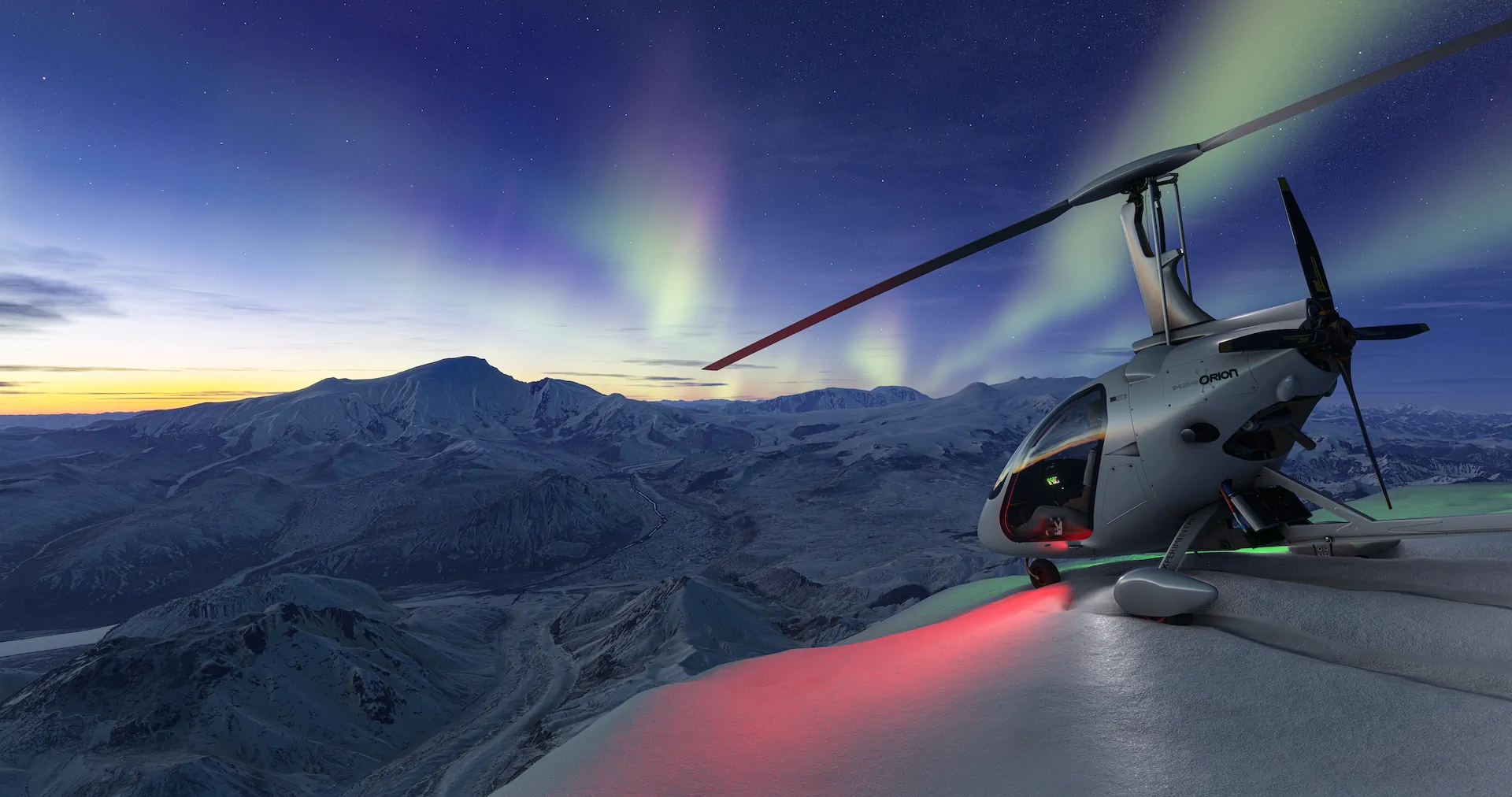
MSFS 2024 introduces entirely new weather phenomena. The Aurora Borealis (Northern Lights) can now be observed on specific dates, with players able to change the in-sim date to view this spectacular phenomenon. It’s even visible from the world map, allowing easy location of viewable areas.
Tornadoes make their debut, currently available in specific missions with plans for integration into live weather events in the future. The development team is actively seeking reliable data sources to implement live tornado events, adding a new level of challenge for storm-chasing enthusiasts.
Wildfires have also been modeled, using a modified version of the cloud system to create fire-specific fog and smoke effects. These not only impact visibility but also create challenging scenarios for firefighting missions.
The most comprehensive addition is the introduction of seasonal changes. The virtual world now transforms throughout the year, with over 23 different biomes accurately reflecting the changing seasons. From the vibrant colors of autumn to the stark beauty of winter, these changes aren’t merely cosmetic. They affect flight physics too, with snow and ice impacting takeoff distances and handling, while summer conditions create challenging thermals for glider pilots.
Visibility and fog simulation have also seen significant improvements. The simulator can now create layers of fog or pollution near the ground, providing a more realistic representation of low-visibility conditions up to about 2000 meters altitude. Temperature inversions and their effects on visibility are accurately modeled, adding another layer of realism and challenge for pilots.

Impact on Flight Dynamics and Gameplay
Behind the scenes, MSFS 2024 employs a new Computational Fluid Dynamics (CFD) system to simulate wind and wake turbulence with greater accuracy. This system extends up to 10 kilometers around the aircraft and persists for up to 6 minutes, allowing for realistic wake turbulence effects from other aircraft. It also accurately simulates terrain-induced turbulence and updrafts, creating more realistic mountain flying experiences and improved gliding simulation with accurate thermal and ridge lift.
These atmospheric improvements profoundly impact aircraft behavior. Turbulence effects are more realistic and varied based on weather conditions. Different types of precipitation affect aircraft performance in unique ways. Wind effects on takeoff, landing, and in-flight handling have been enhanced, and there’s more precise modeling of how temperature and humidity impact engine performance and lift.
New particle systems allow for realistic dust and grass movement from rotor wash, and there’s more accurate simulation of aircraft icing in appropriate weather conditions. Water physics have also been improved, with realistic water spray effects when taking off or landing on water in adverse weather.
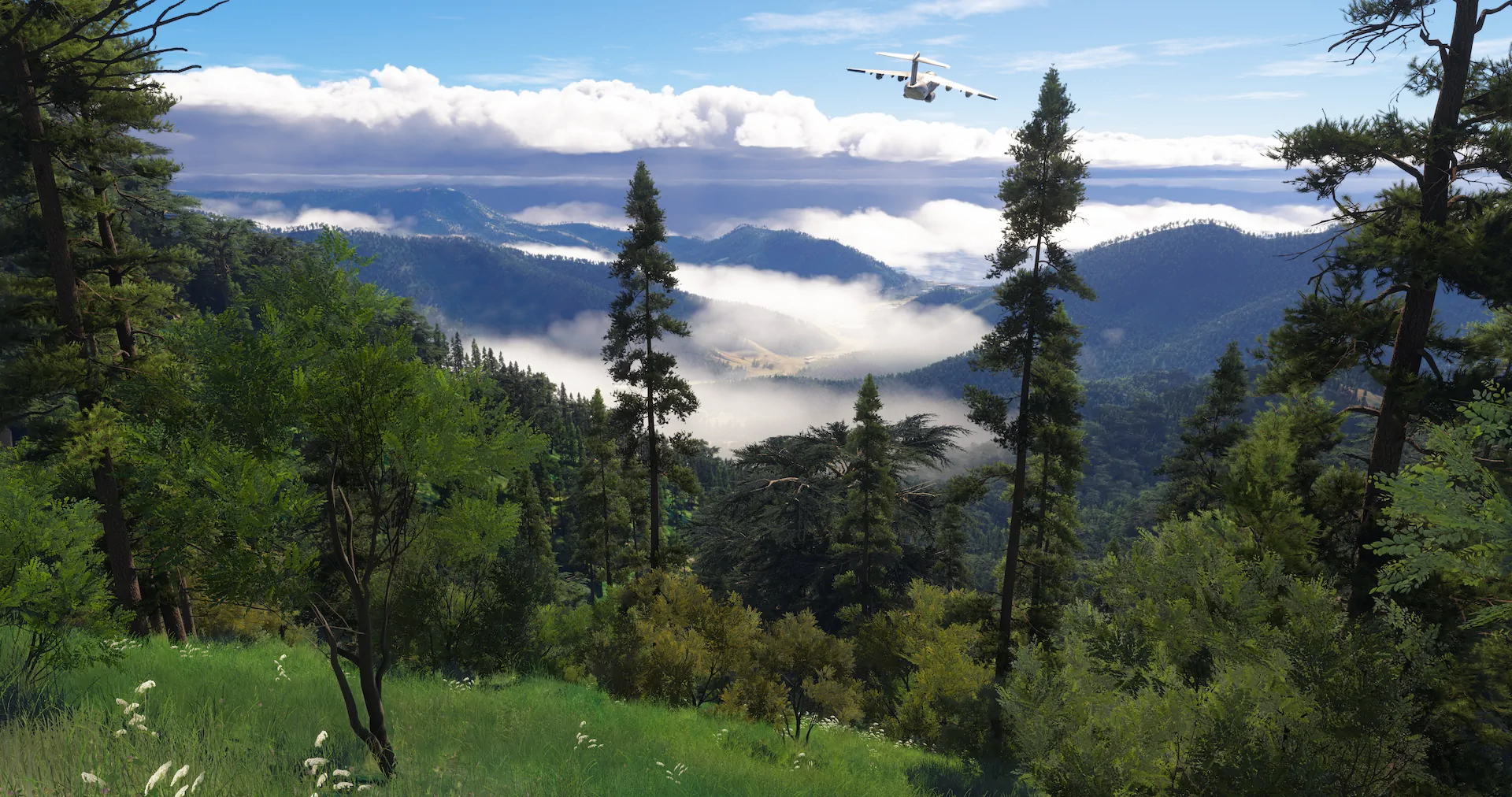
The introduction of fully functional windshield wipers adds a new layer of cockpit management during wet conditions. Pilots can now actively improve their visibility in rainy weather, a feature many have been craving for since MSFS 2020 came out!
A new 24-hour historical weather feature allows pilots to experience weather conditions from earlier in the day, enhancing realism for multi-leg flights and providing more diverse flying experiences.
For career mode enthusiasts, the dynamic weather system plays a significant role. Weather conditions affect the availability and difficulty of certain missions, adding an extra layer of realism and challenge to long-term gameplay.
Technical Advancements
Despite the increased complexity, the development team has focused on optimization to ensure smooth performance across various hardware configurations. Multi-threaded processing for weather effects, including wake turbulence simulation, minimizes impact on overall simulator performance. Scalable effects maintain performance on lower-end systems.

The flight planner includes enhanced options for checking and customizing weather conditions, allowing for more detailed pre-flight weather briefings. It offers the ability to view forecast weather along planned routes and integrates with the live weather system for realistic flight planning.
The move to a cloud-based architecture for weather data promises more frequent improvements and faster integration of new weather data sources. This not only indicates that the weather system will continue to evolve post-release but also reduces local storage requirements for weather-related assets.
With MSFS 2024, Microsoft and Asobo seem to have gone after many of the community requests regarding weather depiction in the sim, creating more than just a weather system – a living atmosphere that responds dynamically to the world around it. It’s incredibly promising and looked fantastic during my brief hands-on time during the Global Preview Event!
For a full overview of all that’s new in Microsoft Flight Simulator 2024, check out our comprehensive writeup here!