






When we covered Pilops back in February 2025, the question we left hanging at the end of the article was a simple one: could it sustain a critical mass of players? A persistent, player-driven economy only works if enough people are actually flying. Without that, the whole premise falls apart.
Fifteen months later, Pilops founder José Fortes came back with some numbers. More than 2,350 registered pilots, over 21,500 flights logged across every airport in Microsoft Flight Simulator 2024, and an active Discord community. The economy is moving and the platform seems to have hit a sustainable stage. And now, with what the developer describes as the biggest structural update since launch, Pilops is much improved compared to the foundations launched early last year, and with a clearer sense of where it’s going.
A year of building
Before getting into the April 2026 update, it’s worth noting how much the platform has changed since we first wrote about it. The Pilops that launched in early 2025 was an ambitious beta with a compelling concept but some rough edges. What shipped in the months that followed filled in a lot of those gaps.

Players can now create their own virtual airlines, invite friends or community members to join, and manage a shared fleet, hangars, and route network together, splitting profits and losses along the way.
Aircraft are also no longer just tools for earning currency, they accumulate real wear and tear. Engine hours, tyre cycles, and brake wear are all tracked continuously, and hard landings don’t just feel bad, they can damage cargo and reduce the earnings from that flight. Every landing is also scored on a scale of 0 to 100, factoring in G-force at touchdown, wing angle, and approach speed, with passenger feedback tied directly into the result.
The most recent addition before the April update was custom routes: players can now rent stands at airports worldwide and build their own route networks between them, attracting organic cargo and passenger demand across the airports they connect. Each operator effectively builds their own mini-airline infrastructure within the shared world.

A used aircraft marketplace
The headline feature of the April 2026 update is a player-to-player used aircraft marketplace. Pilots can now list aircraft from their hangars for sale, browse listings from other players, and complete trades directly within the platform. According to the team, it’s the most requested feature since launch.
The implications are interesting for an economy-driven platform like Pilops. A secondary aircraft market means pricing is now influenced by community behaviour on two fronts: the cargo and route economy on one side, and aircraft supply and demand on the other. A type that gets popular drives up resale values. A plane nobody wants collects dust in a hangar until someone lists it cheap. That’s the kind of emergent, player-driven dynamic the platform was built around from the start, now extended into a new loop.
The purchase page has also been updated to surface used listings for a specific model alongside new aircraft, so when you’re shopping for a turboprop, you’ll see both new prices and what’s currently on the secondhand market in one place.
A redesigned live map
The second major addition is a complete overhaul of Pilops’ interactive flight map. The updated version shows every active flight on the platform in real time, with improved readability and a smoother overall experience. You start a flight, open the map, and you can see exactly who else is out there and where.
A new flight management system
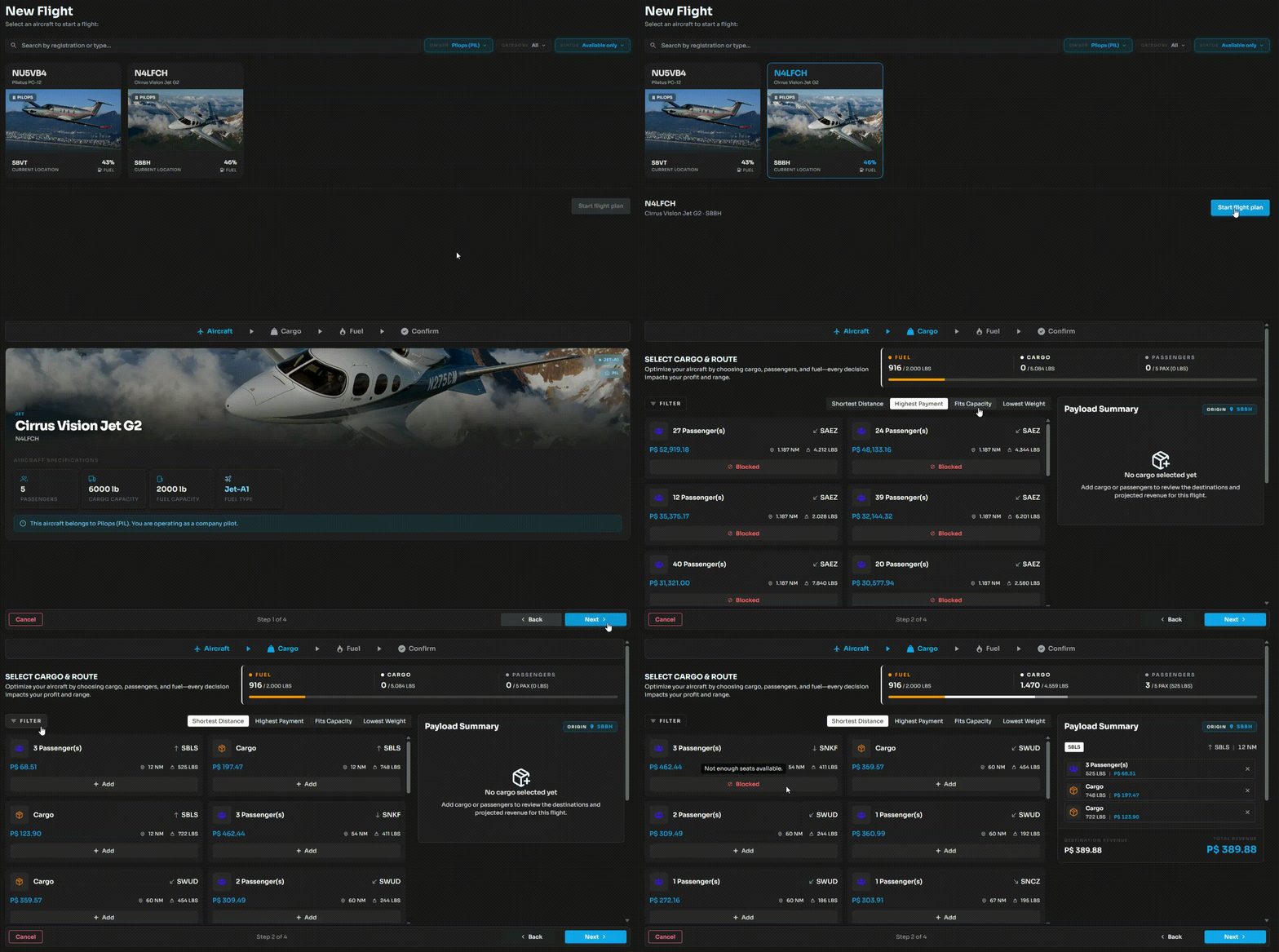
The third piece of the April update is less flashy but arguably more important for the platform’s long-term health: a complete rebuild of the flight management system. The entire flow from account creation to starting a mission has been redone from the ground up, with a focus on reducing friction for new players.
This is a direct response to early criticism. When Pilops first started gaining wider community attention, a consistent complaint from new players was that the UI felt underdeveloped and that getting started was confusing. A cleaner onboarding flow is indeed very important for a freemium platform where the barrier to trying it is zero but the barrier to staying is everything.
Economy rebalancing and the end of route stacking
Beyond the three headline features, the update includes some economy changes worth noting for anyone already active on the platform.
Long-haul custom route stacking, which had been allowing players to farm disproportionate profits by running multiple routes between the same airport pair, has been closed off. The platform now enforces one route per airport pair. Short VFR cargo prices have been nudged upward slightly, and airliner prices in Pilop Points have been adjusted to reflect the rebalanced economy. Airline admins also have a new control to restrict whether pilots can use company balance to cover fuel costs.

What’s coming next
José also shared a few items from the 2026 roadmap. A redesigned desktop client is planned, with more in-flight data available during the session. The maintenance system is set to become more granular, and a global economy visualisation layer is in development that would make broader market dynamics more visible to players. No release dates have been confirmed for any of these yet.
Where Pilops sits in 2026
The MSFS career add-on space has gotten more crowded since we first wrote about Pilops. Pilops positioning is somewhat distinct, though, built around a shared, persistent world where the actions of other players directly affect your experience.
The platform remains free to start. Pilop Points, the premium currency, can be purchased to accelerate progression, but the base experience is fully playable without spending anything.
If all of this sounds like something worth exploring, we’ve partnered with Pilops to put together an exclusive perk for our Captain’s Club members. Our Captains get a 15% discount on any Pilop Points package, redeemable directly on the platform. Head to the Captain’s Club dashboard to reveal your code, or join the Club if you haven’t already.
You can sign up and start flying at pilops.com.