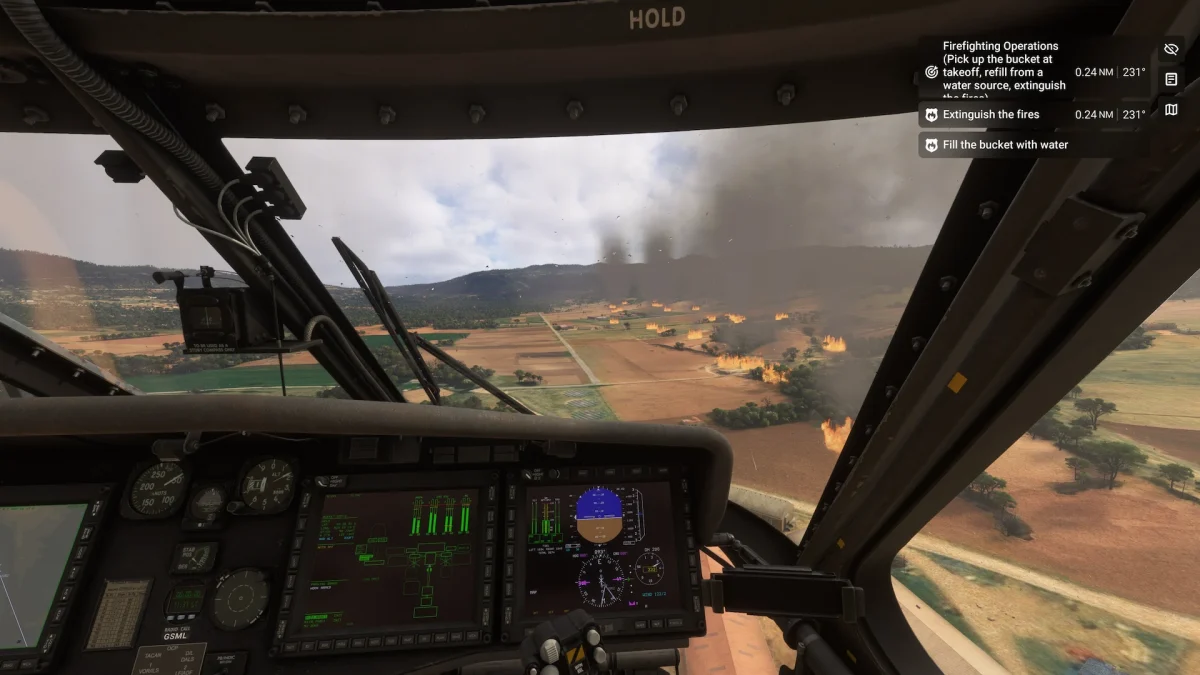






Microsoft Flight Simulator 2024’s second major update has landed, promising important changes for VR users. Sim Update 2 introduces a wide range of improvements that directly address longstanding VR issues in Microsoft’s latest sim, while also implementing key technologies that allow modern headsets—such as the Pimax Crystal Light and the recently released Crystal Super—to perform closer to their full potential.
From the introduction of Fixed and Dynamic Foveated Rendering to a wide range of fixes for panel interaction, UI scaling, and controller behavior, this update makes a strong case for VR users to revisit the platform.
The star feature in Sim Update 2 for VR users is undoubtedly foveated rendering. MSFS 2024 now supports both fixed and eye-tracked implementations. This allows the simulator to render the area you’re focused on at full resolution, while reducing quality in peripheral vision to ease the GPU load. The result? A significant boost in frame rates without a noticeable drop in visual quality.
Fixed Foveated Rendering alone can result in significant FPS gains, especially on high-resolution headsets. With eye tracking, the gains are even more precise, as Dynamic Foveated Rendering shifts the high-resolution zone based on where you’re actually looking.
This is exactly the kind of optimization headsets like the new Pimax Crystal Super were in need of. With its eye-tracking sensors and 3840×3840 per-eye resolution, the headset can now take full advantage of these rendering technologies, delivering a much smoother, more stable experience in MSFS 2024.
Even the more accessible Crystal Light, which lacks eye tracking but still features Fixed Foveated Rendering, benefits greatly. It brings excellent performance gains for simmers who want clarity and performance without stepping into the highest-end price brackets.
Sim Update 2 doesn’t stop at performance. It addresses long-standing interaction issues that have made VR less comfortable for many users:
- The 3D UI panel ratio has been fixed, solving distorted panel issues in VR cockpits.
- The toolbar now behaves properly when transitioning in and out of VR sessions.
- Several issues with VR controller bindings—especially missing configurations for the right-hand controller—have been addressed.
- UI elements now retain their position and scale after pausing/resuming the sim.
- Improvements to gesture detection for interacting with knobs and levers add to the realism.
These changes add up to a much more intuitive and immersive experience. Users have reported better menu responsiveness, reliable camera control, and more accurate hand-tracking across various headsets.
The update also brings in official support for DLSS 4, the latest iteration of NVIDIA’s super sampling technology. When combined with the foveated rendering system, this leads to higher performance and cleaner visuals, especially when flying in complex scenery or weather conditions.
Importantly, it’s highly recommended to update to the latest NVIDIA driver (version 576.28) to ensure full compatibility and to avoid crashes, especially when switching between DLSS modes in VR.
Sim Update 2 is just the beginning. The VR community is hopeful that Asobo will continue refining these new features, possibly expanding dynamic rendering zones, and further optimizing for new headsets. For now, this update represents a major step forward in making VR a viable, high-performance platform for flight simulation.
If you’re using a headset like the Pimax Crystal, now is the time to fully lean into what it can offer. And if you’re not, this might be the update that finally makes the jump worth it!
MSFS Addons is reader-supported. When you buy through links on this page, we may earn an affiliate commission at no additional cost to you. Thank you!